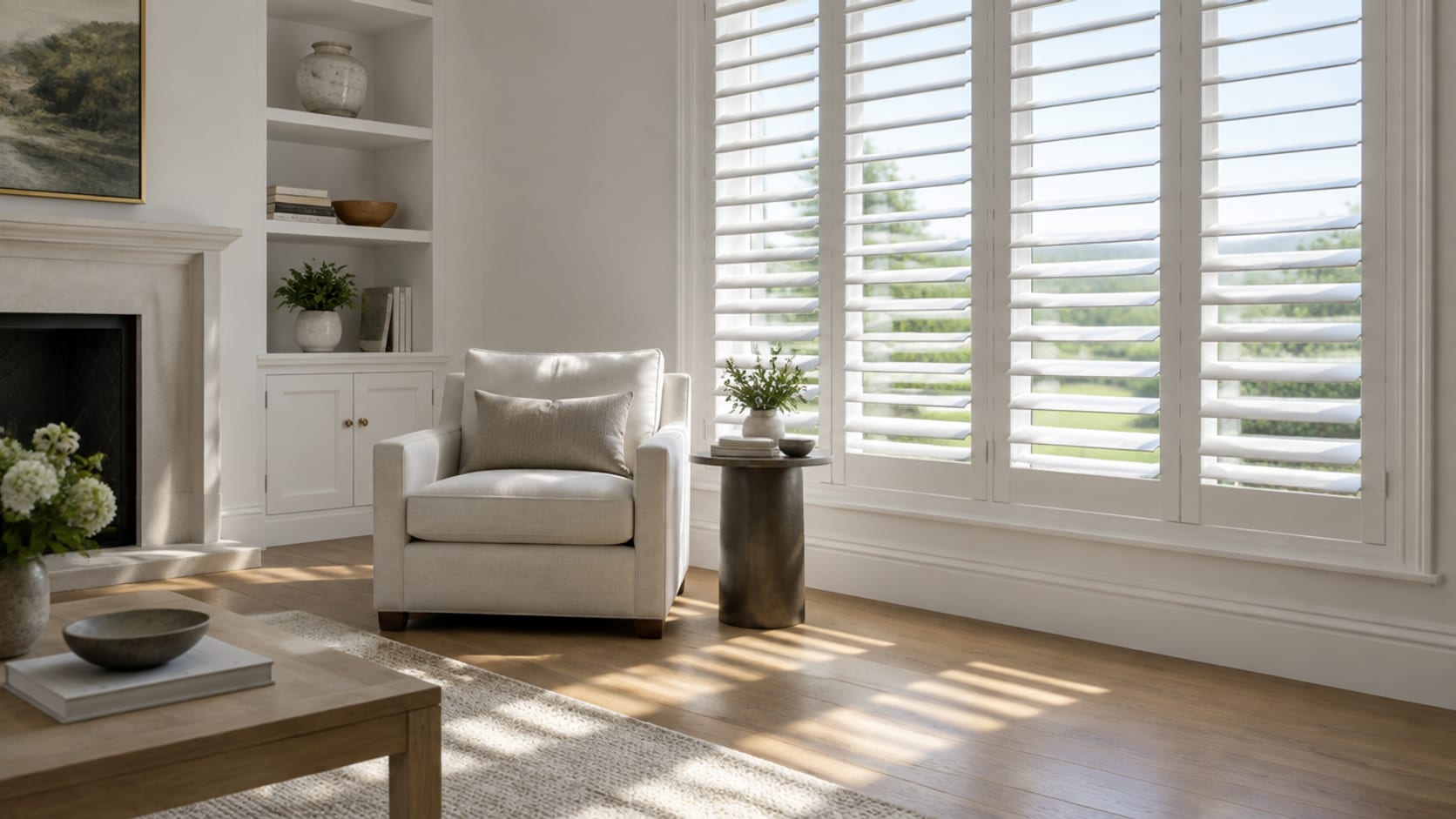
Plantation Shutters, Built for the Opening
The one window treatment that reads as part of the house. Free in-home consultation across the Pittsburgh area.
- ★Free in-home consultation
- ★Measured & installed by one team
- ★Made to order, not off the shelf
- ★Evans City showroom · Mon–Sat
Shutters are the one window treatment that behaves like joinery rather than soft furnishing. They are fitted to the opening, they stay with the house, and done properly they look like they were specified by the architect rather than added later.
That also makes them unforgiving. A shutter panel a few millimetres out will bind, sag or show a daylight gap down the hinge stile, and there is no adjusting it afterwards. Everything depends on the survey.
Get a free in-home consultation
Tell us about your windows. We bring the samples to you, measure properly, and quote in writing — no obligation.
Louver size changes the whole character
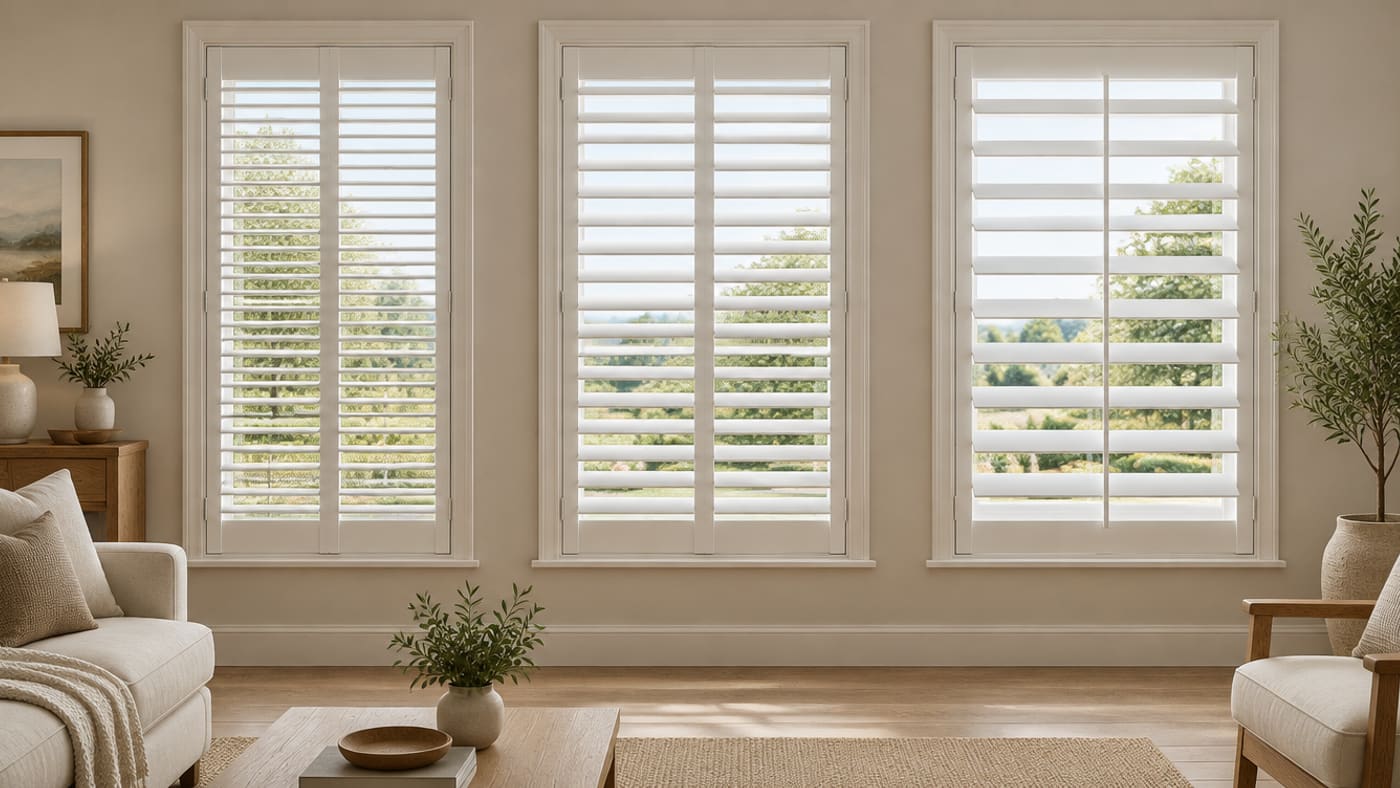
A narrow louver around two and a half inches gives a traditional, finer look and suits smaller cottage-scale windows. Three and a half inches is the common middle and the one most people picture. Four and a half inches gives the cleanest sightline and the most glass when open, because fewer blades across the window means less to look through.
Bigger louvers also mean a bigger gap when closed, so for a bedroom where you want darkness the smaller louver closes tighter. We walk the house and pick per room rather than per order.
Basswood or composite - it depends on the room
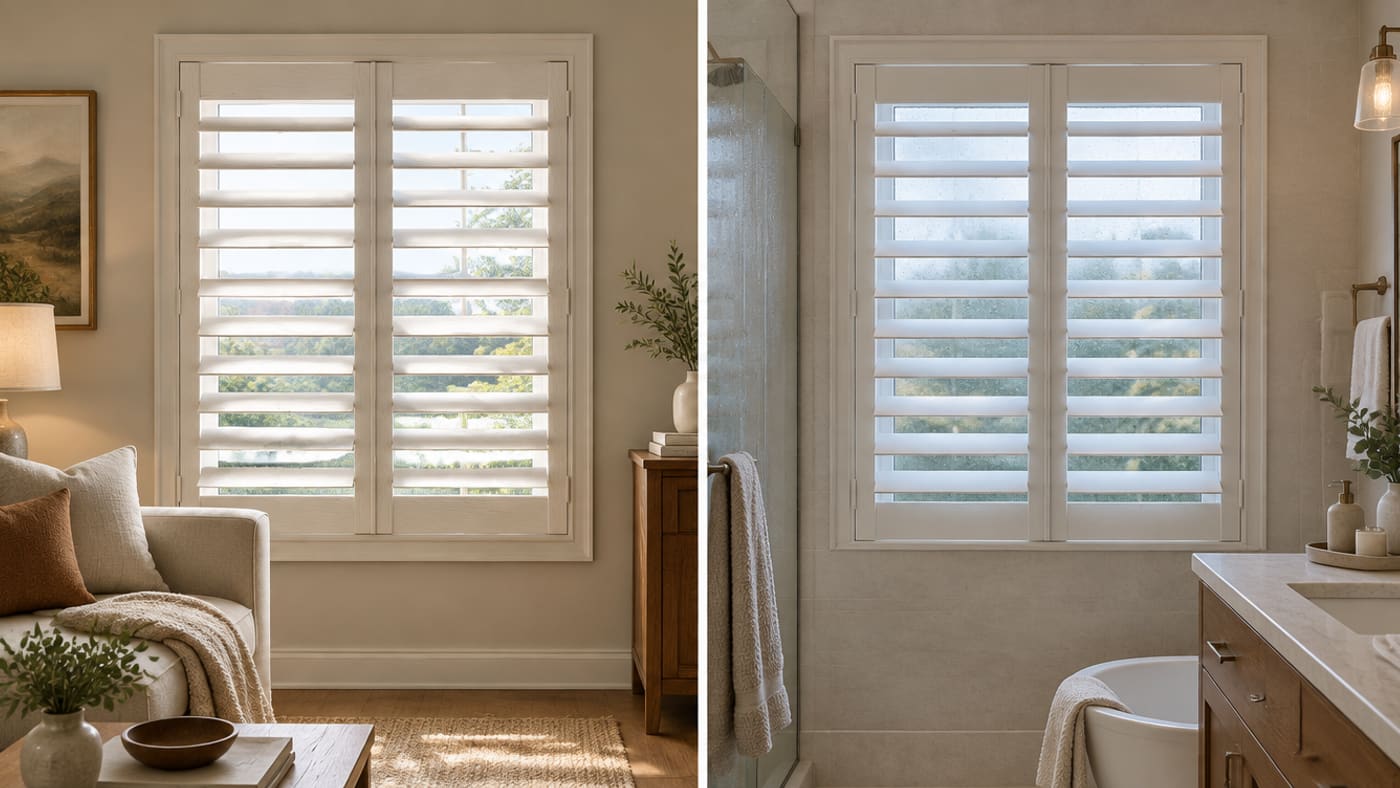
Basswood is light, takes paint and stain beautifully, and allows the longest panel spans before you need a divider rail. It is the right choice for living rooms, bedrooms and anywhere dry.
Engineered composite, a dense core wrapped in a hard finish, does not swell, warp or discolour in humidity. It is heavier, so panels span less, but it is the correct specification for bathrooms, over kitchen sinks and in laundry rooms. Putting basswood in a bathroom is a mistake you only make once.
Panel configuration is where awkward windows get solved
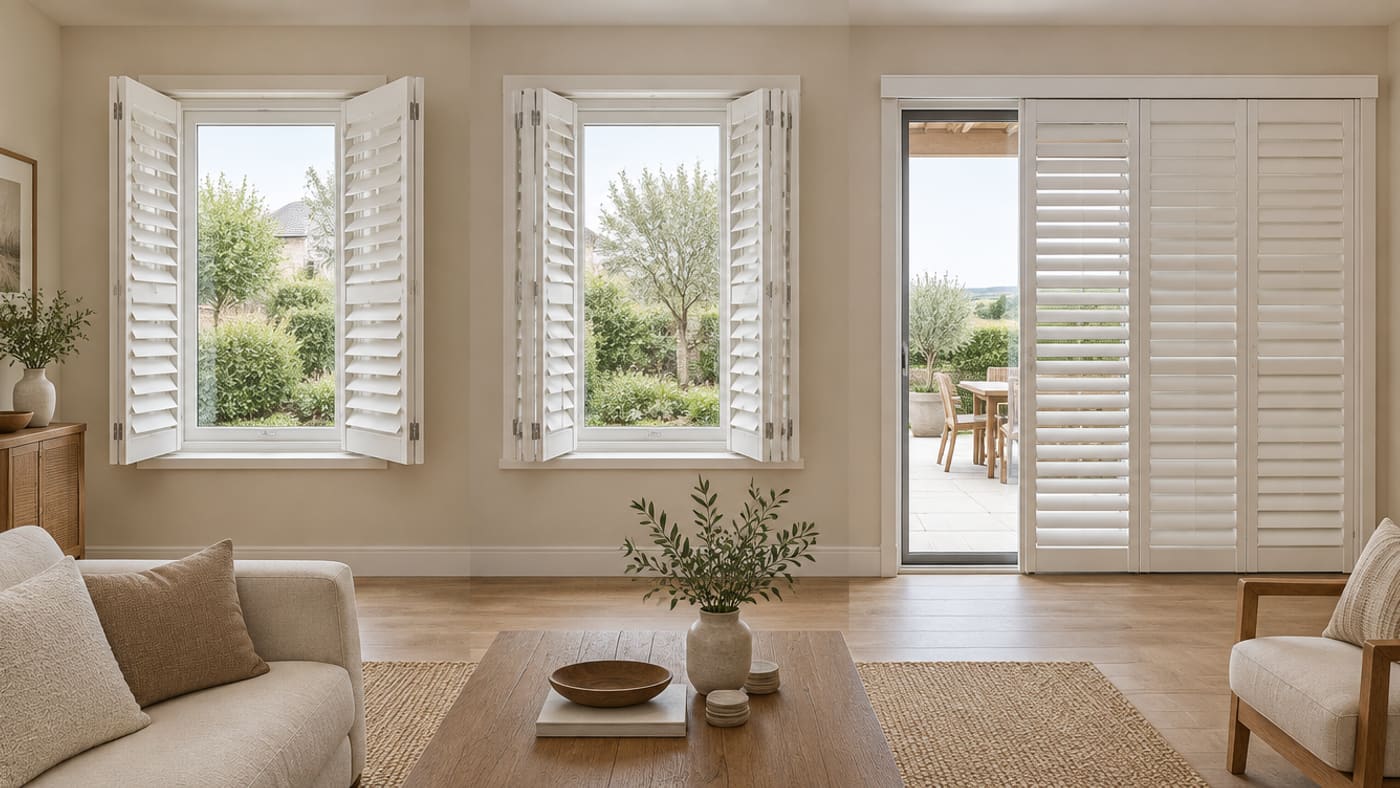
Standard hinged panels swing into the room. Bi-fold panels concertina back so a wide opening does not need four feet of swing clearance. Bypass panels slide on a track, which is how patio doors and very wide openings get shuttered at all. Cafe style covers only the lower half, giving privacy at street level while leaving the top of the window open.
French doors need a cutout for the handle and a shallower frame so the door still closes. That is a measurement problem rather than a product problem, and it is the sort of thing we would rather find at the survey than at the install.
Hidden tilt, and why it matters
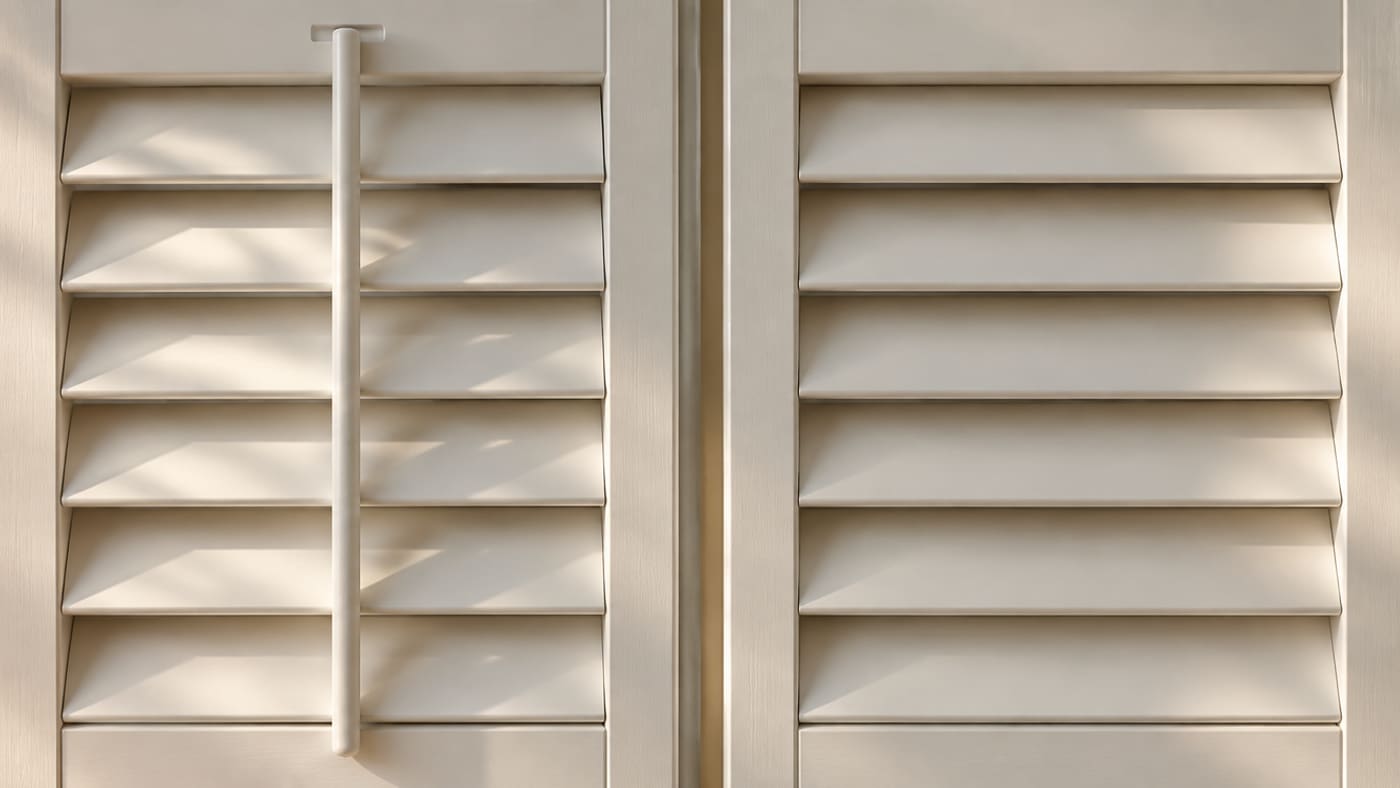
A traditional tilt rod runs down the centre of the panel and moves the louvers together. It is the classic look. A hidden or clearview tilt moves the louvers from a concealed mechanism in the stile, so the panel face is uninterrupted and the view is cleaner.
Hidden tilt costs more and looks considerably better on a wide louver. On a narrow traditional shutter the centre rod is part of the character and we would usually keep it.
Common questions
- Do shutters add value to the house?
- They are a fixture rather than a furnishing, so they stay with the property and are generally treated as an improvement rather than a decoration. We would not promise you a number, but they are the window treatment buyers notice.
- How much light do closed shutters block?
- More than blinds and less than a sealed blackout shade. Closed louvers overlap but the frame still has tolerances, so a bedroom that needs true darkness is better served by shutters with a blackout roller behind, or by [blackout shades](/blackout-shades) alone.
- Can you shutter a bay window?
- Yes, and it is one of the places shutters are at their best, because the panels follow the angles and the bay reads as one piece. Bays need careful angle measurement at every post, which is exactly why we measure rather than asking you to.
- How long do they take?
- Custom shutters are built to your sizes, so lead times run longer than fabric products. We give you a date at quote, and we would rather quote honestly than optimistically.
Talk to us about your windows
Free in-home consultation. We bring the samples to you, measure properly, and quote in writing.
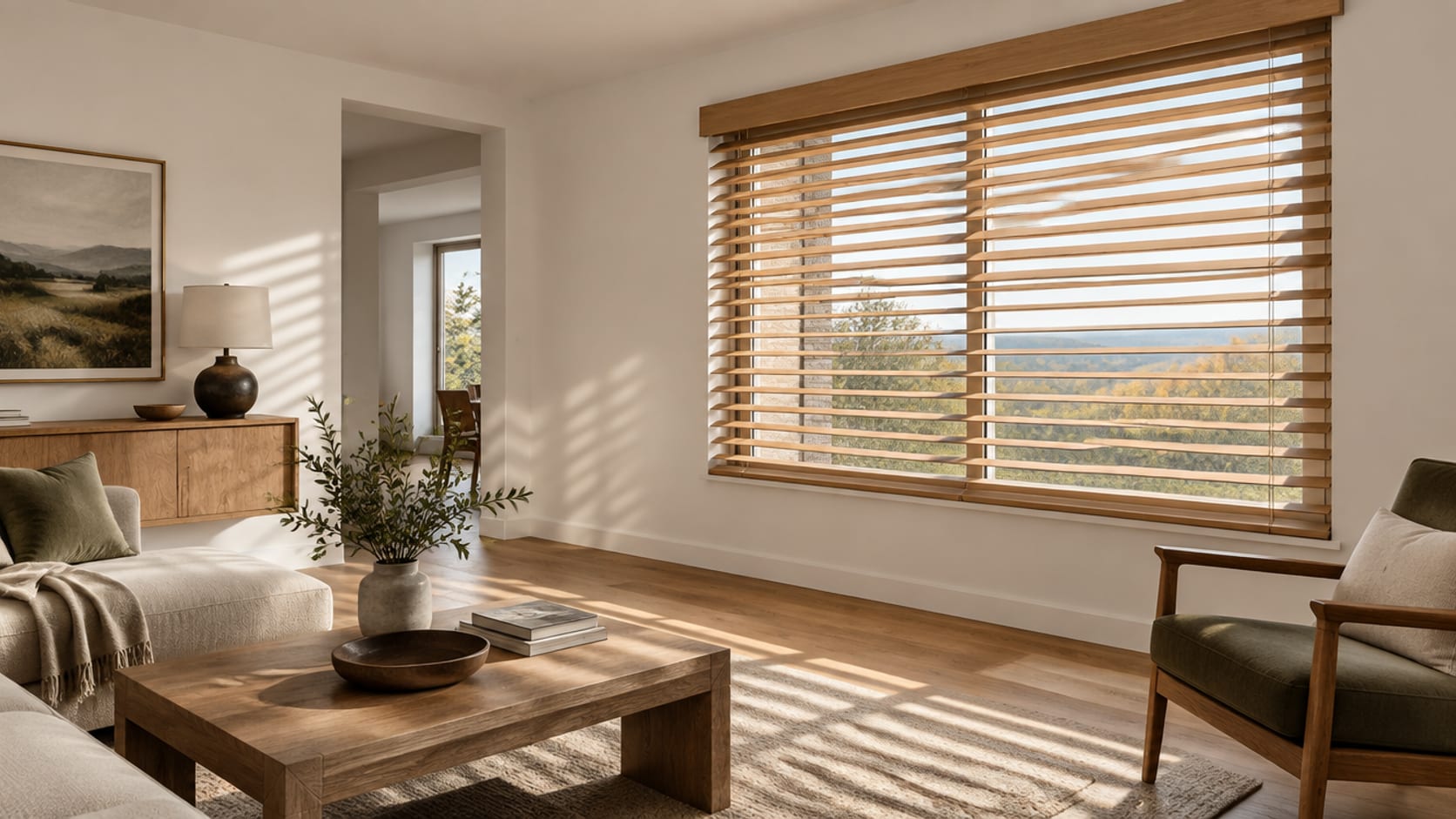 Wood & Faux Wood BlindsReal timber where it belongs, composite where timber fails. Free in-home consultation across the Pittsburgh area.
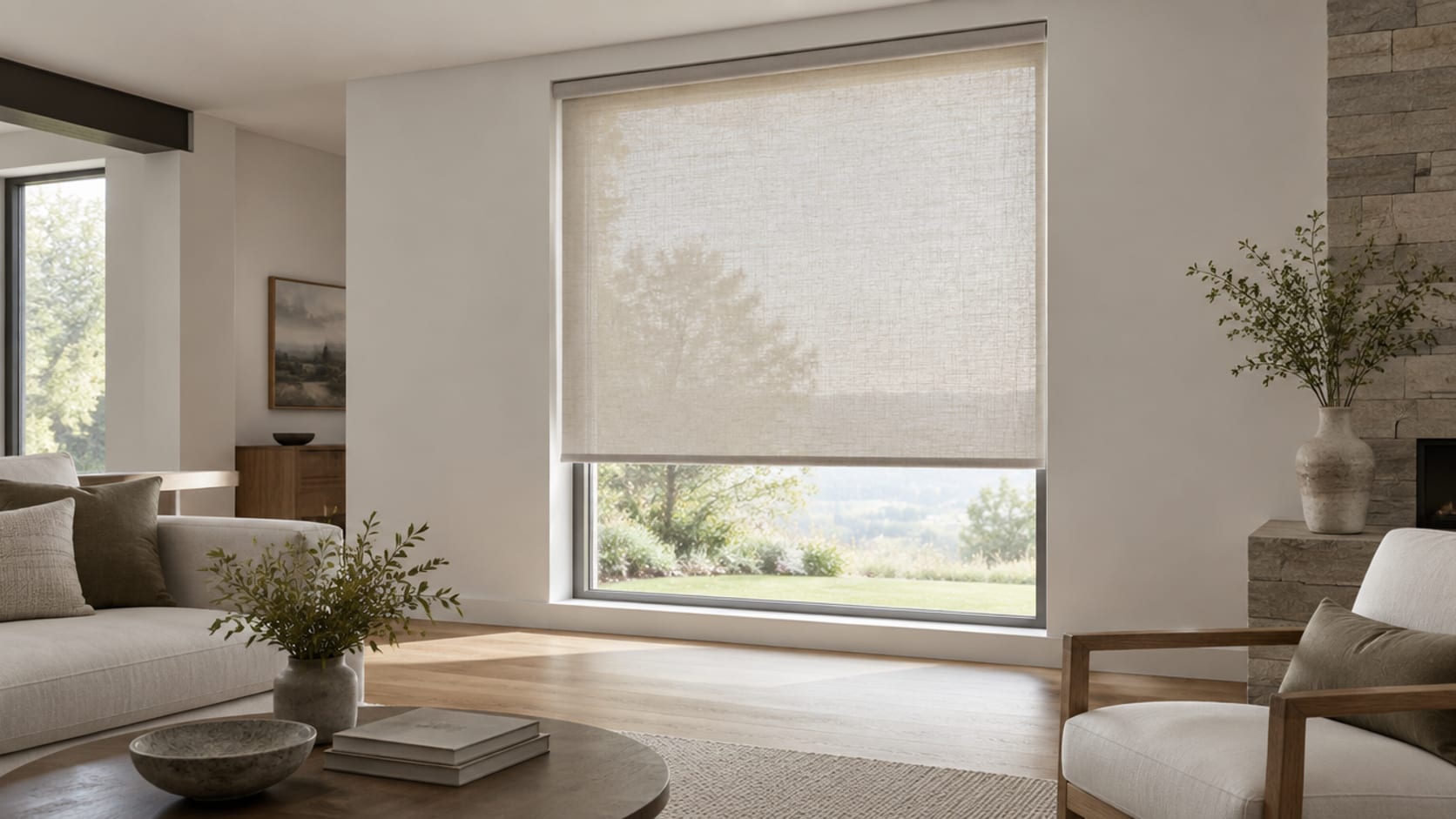 Roller ShadesOne clean fabric, one clean line. Free in-home consultation across the Pittsburgh area.
 In-Home ConsultationSpecification decided in the room, not from a catalogue.