Cellular Shades, for Windows That Lose Heat
The one shade that does real insulating work. Free in-home consultation across the Pittsburgh area.
- ★Free in-home consultation
- ★Measured & installed by one team
- ★Made to order, not off the shelf
- ★Evans City showroom · Mon–Sat
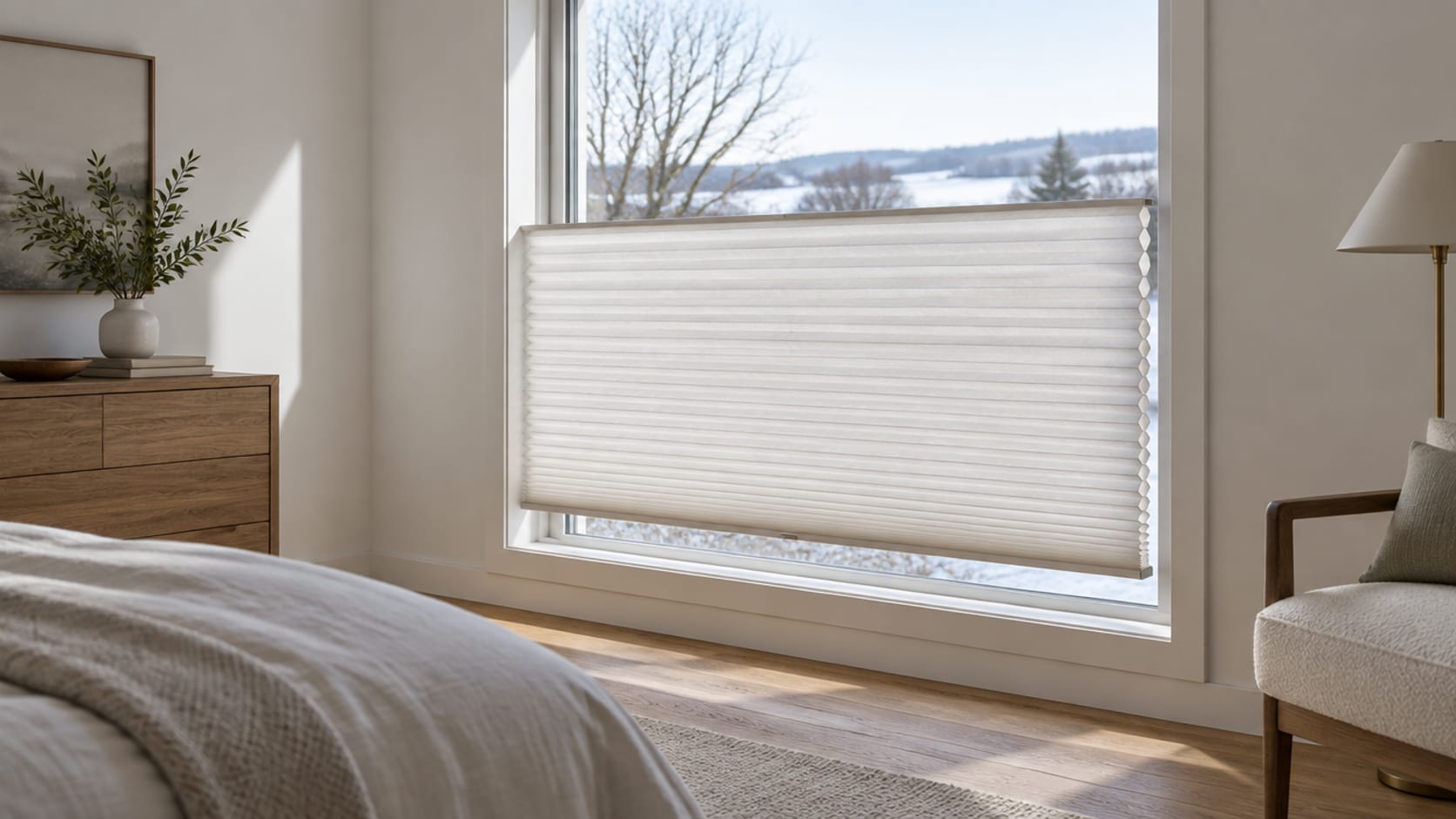
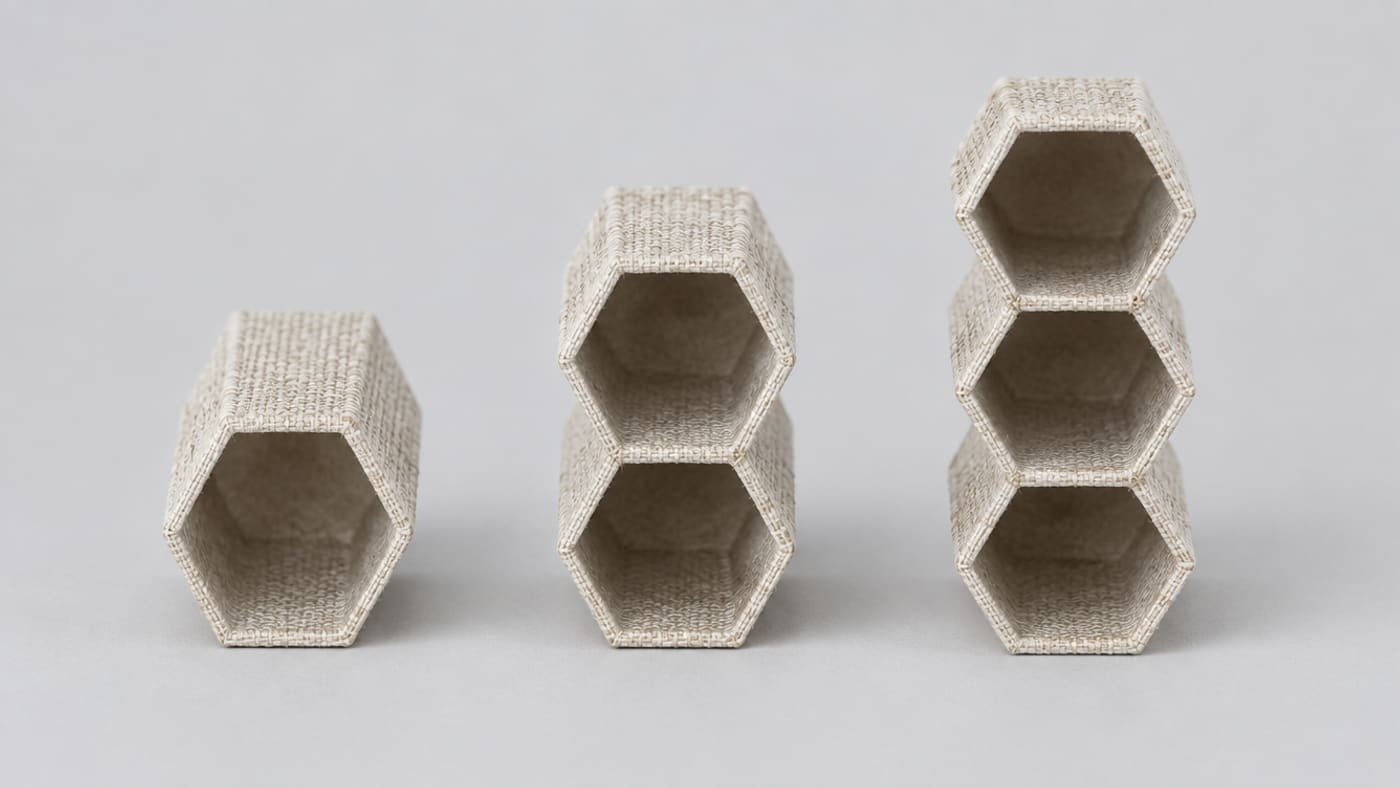
A cellular shade is pleated fabric folded into hexagonal cells, and each cell traps a pocket of still air against the glass. Still air is a poor conductor of heat, which is the entire point - this is the one window covering whose main job is thermal rather than visual.
In a Pennsylvania winter that matters. Most of the heat a room loses through a window is lost by conduction and draught at the glass, and a cell structure sitting in the recess slows both.
Get a free in-home consultation
Tell us about your windows. We bring the samples to you, measure properly, and quote in writing — no obligation.
Single, double and triple cell
A single cell is one row of pockets - lighter, less bulky when stacked, and enough for a room that is comfortable already. A double cell adds a second row, roughly doubling the trapped air, and is the usual specification for a room that runs cold. Triple cell exists for extreme cases and stacks noticeably deeper.
Cell size matters too. Smaller cells suit narrow windows and give a finer look; larger cells cover big openings with fewer pleats. We would rather match cell size to the window than sell you the biggest number.
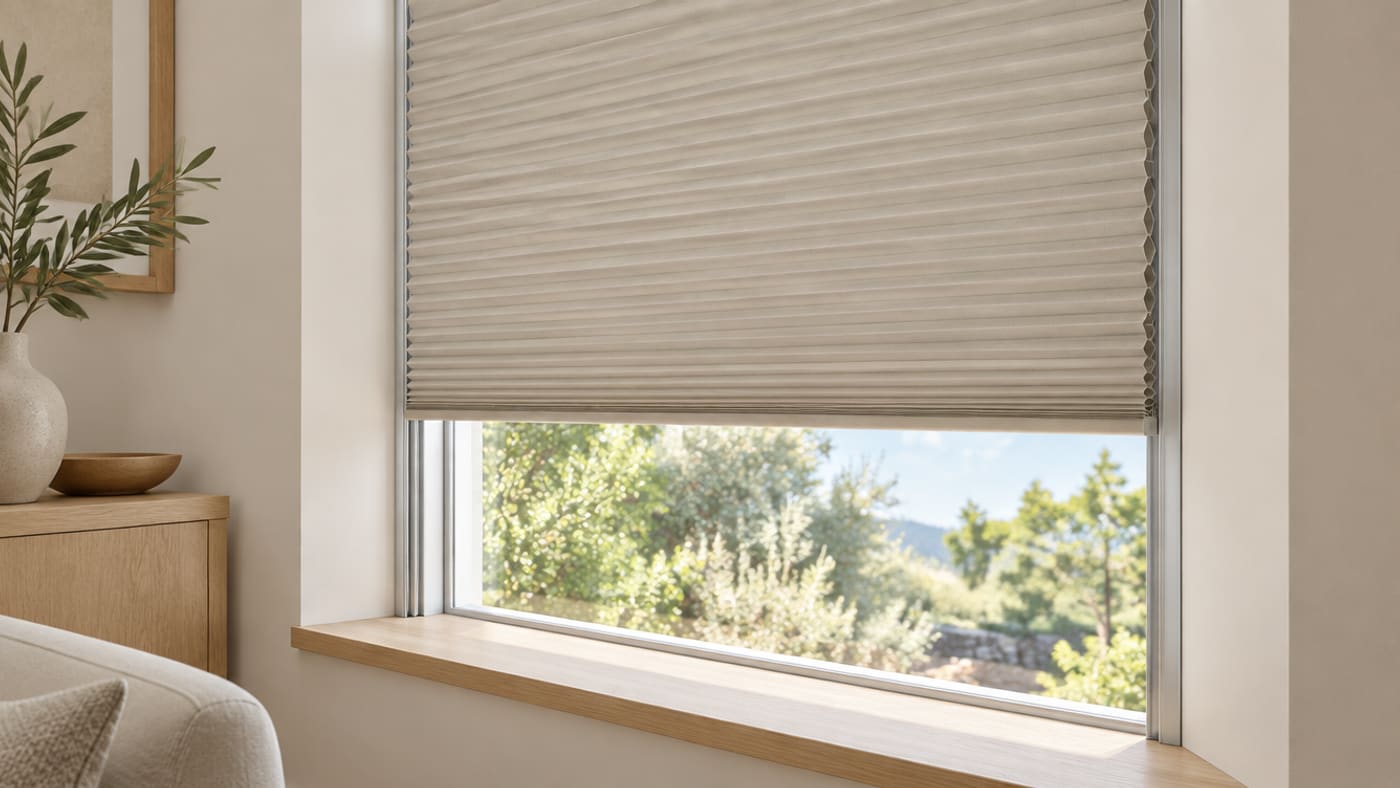
Side channels turn a good shade into a sealed one
A cellular shade hanging free in a recess still lets air move around its edges, and that convection loop undoes a good part of the benefit. Running the shade in side channels closes the gap and makes the installation behave much closer to its rated performance.
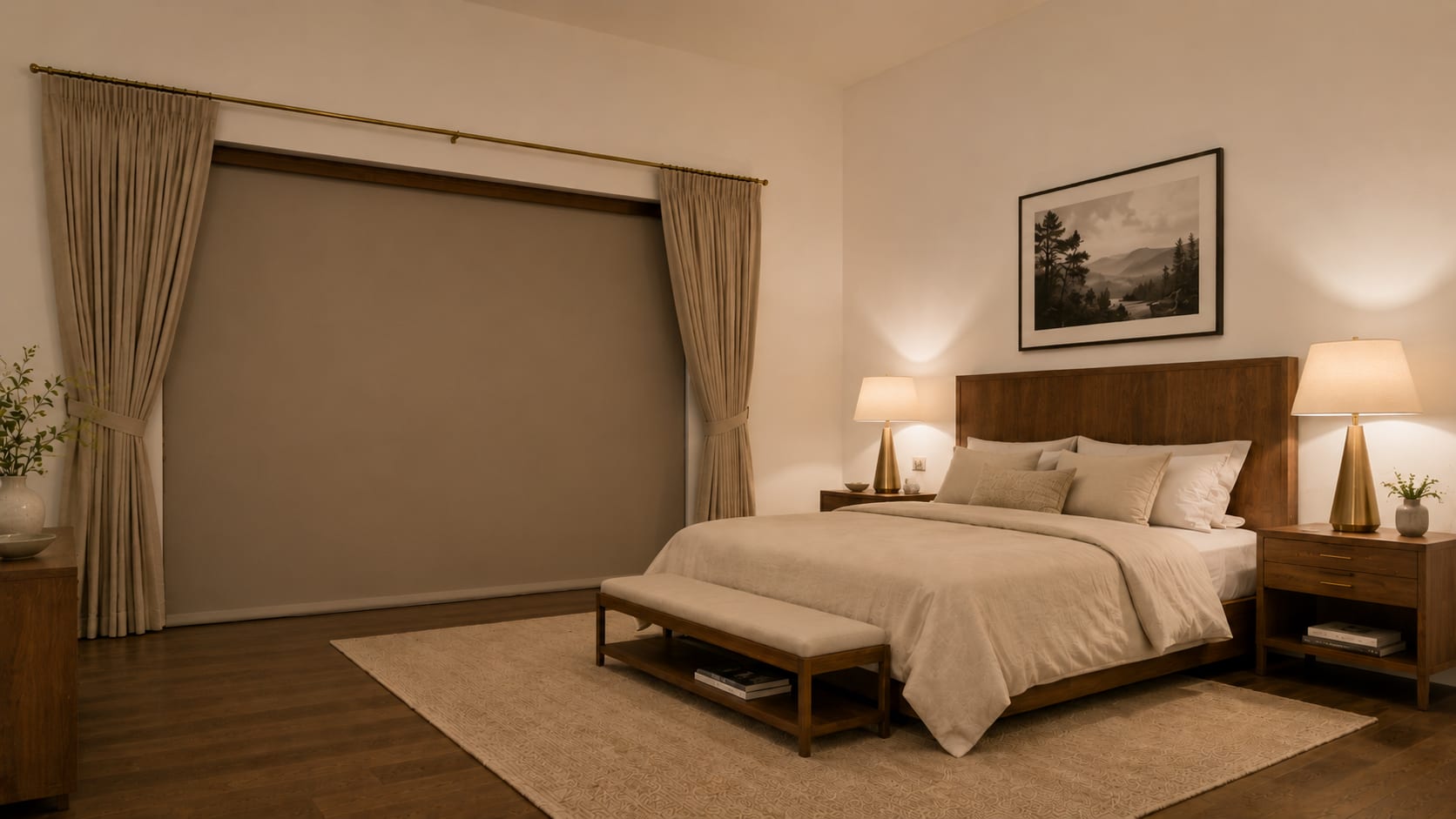
The same channels are what turn a room darkening cellular into a genuinely dark bedroom. The principle is identical to the one described on blackout shades - the fabric was never the limiting factor, the edges were.
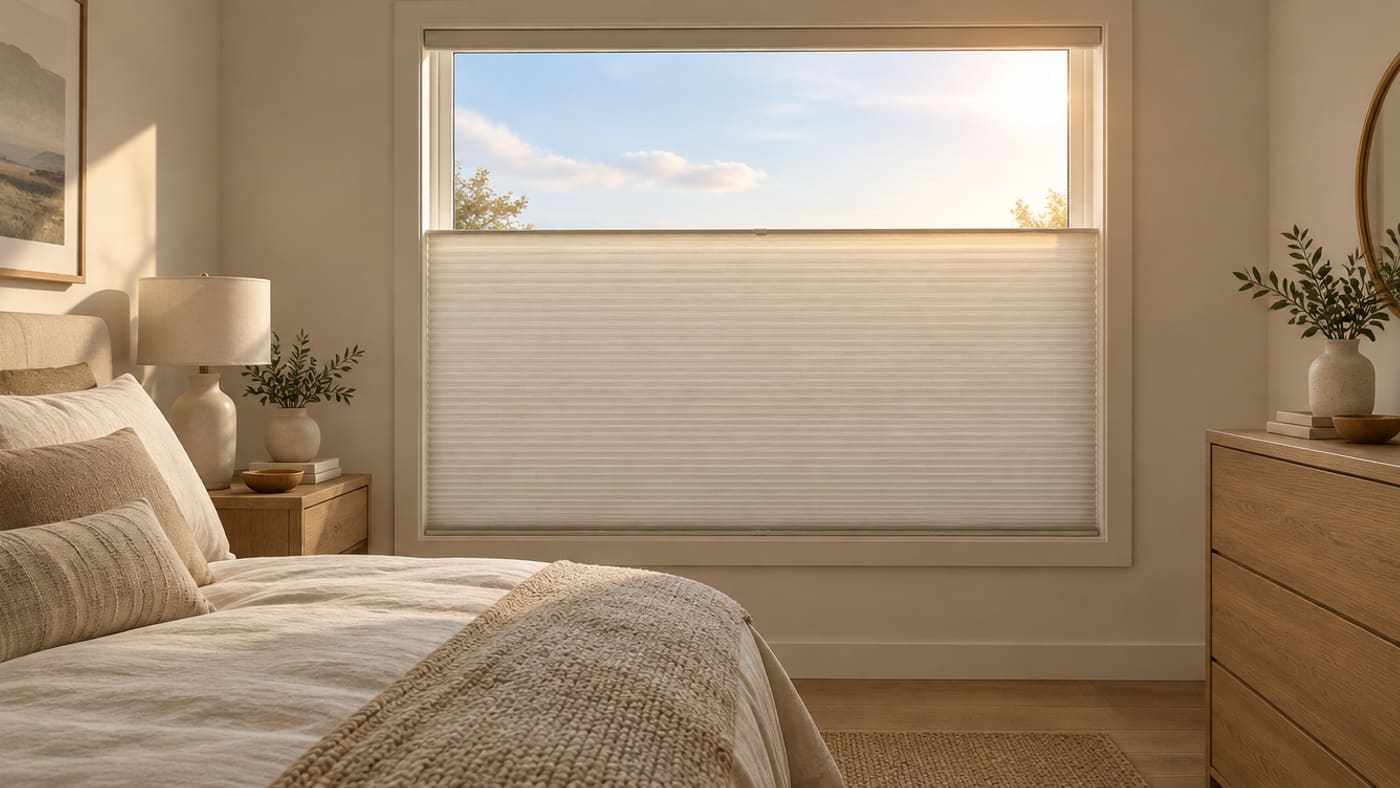
Top-down, bottom-up
Cellular shades take a dual-rail mechanism better than any other product. You can drop the shade from the top to let daylight over it, or raise it from the bottom for privacy at street level while keeping the sky.
It is the right answer for a bathroom, a ground-floor room facing a sidewalk, or any window where you want light and privacy at the same time rather than choosing between them.
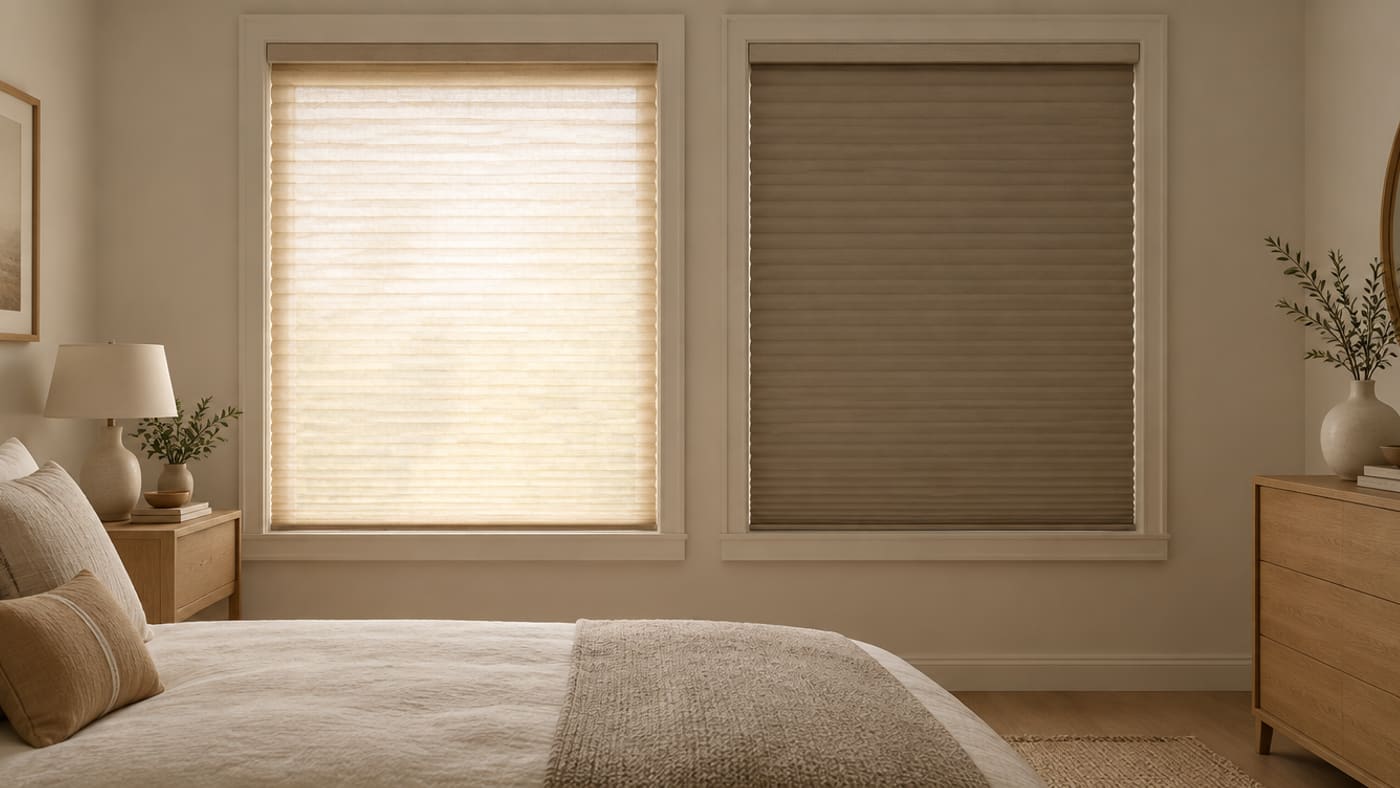
Opacity, and what it costs you in warmth
Sheer and light filtering cells keep the room bright and still insulate. Room darkening and blackout cells have a liner bonded inside the cell, which blocks the light and adds a little more thermal mass.
There is no real trade-off here, unlike most products. A blackout cellular insulates at least as well as a light filtering one, so the choice is purely about how much light you want.
Common questions
- Do cellular shades really reduce heating bills?
- They reduce heat lost at the window, which is a real and measurable effect, particularly on old or single-glazed windows and particularly with side channels. We will not quote you a percentage saving on a whole house, because that depends on your windows, your insulation and your habits.
- Are they good in summer as well?
- Yes. The same trapped air slows heat coming in. For a west-facing room taking direct afternoon sun you may do better with a solar screen roller or an exterior screen, since stopping heat outside the glass beats stopping it inside.
- Do the cells collect dust?
- Less than people expect. Most cellular fabrics have an antistatic finish and a vacuum brush once or twice a year is enough. They are a poor choice directly over a cooking range, where grease is the real problem.
- Can they be motorized?
- Yes, and they are one of the better candidates because they are light. See [motorized shades](/motorized-shades) for how we handle power and control.
Talk to us about your windows
Free in-home consultation. We bring the samples to you, measure properly, and quote in writing.