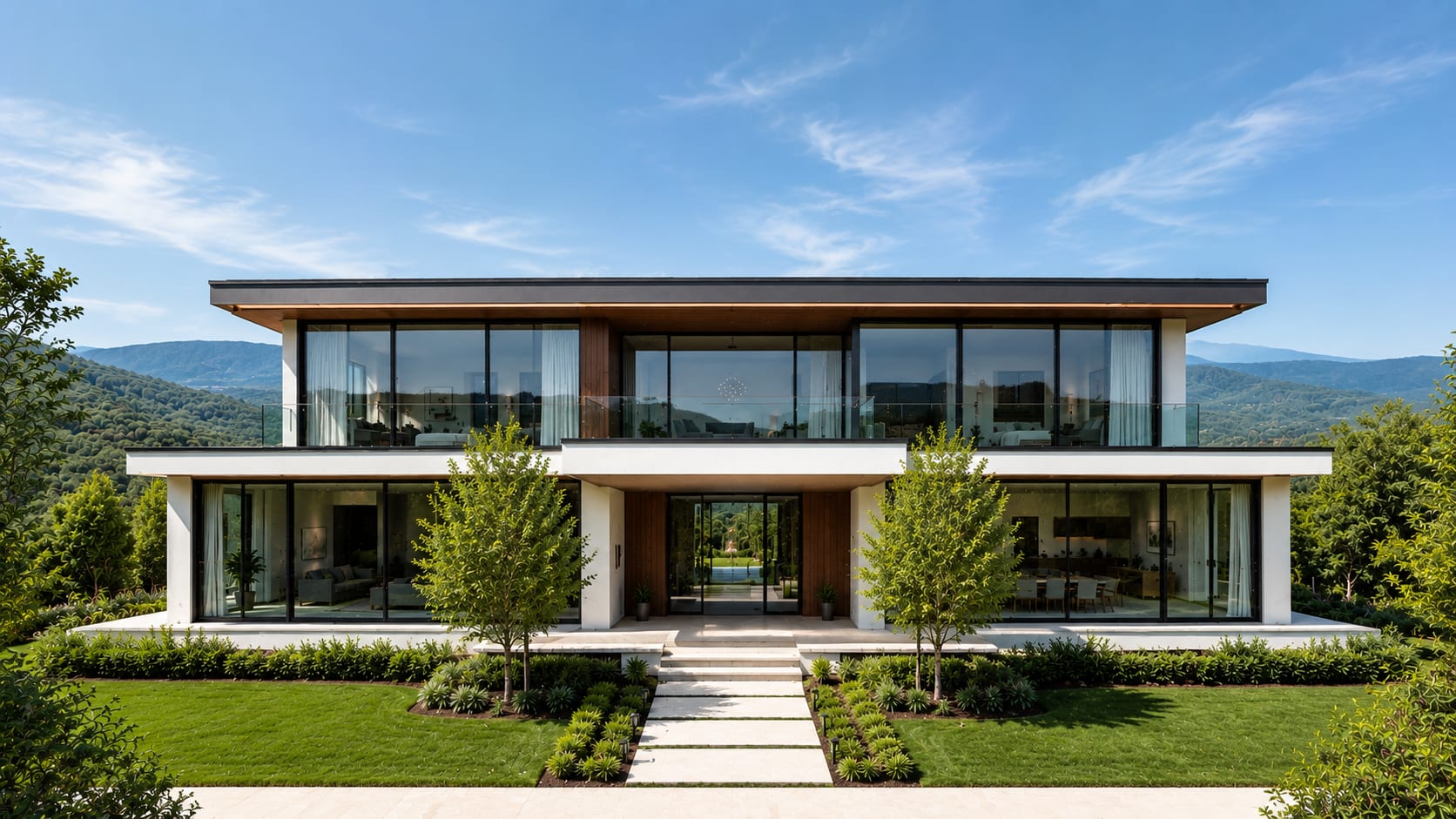
Four layers on one wall of glass. Motorized roller shades handle the afternoon sun, drapery softens the room after dark, smart film turns the corner glazing private on demand, and an exterior screen stops the heat before it ever reaches the window.
Roman shades in a heavy linen. The fold structure reads as fabric rather than hardware, which is what a dining room wants — and motorised, so a whole wall of them moves together before guests arrive.
Glass above a working counter has to be wipeable and out of the way. A motorized roller shade retracts fully into the headbox, and PDLC smart film frosts the window over the sink without darkening the room — it scatters light instead of absorbing it, so the daylight stays.
Three layers for sleep. Drapery for warmth and acoustics, a blackout roller in side channels to seal the light leak at the edges, and dyed smart film that switches the glass to a dark tint with nothing moving at all.
A bottom-up shade lifts privacy from the sill while daylight keeps coming over the top — the one window where that order matters. The shower partition is switchable glass: clear, then frosted at a touch.
Motorized zip screens run in side tracks, so wind cannot lift them out. Drop one against the low evening sun, or close all three and the porch becomes a still, insect-free room.
The same zip screens, used to make an exposed terrace usable. Three sides close for wind and privacy, and the mesh cuts the glare coming off the water without taking the view away.
Scroll to step inside the Mardali home.